Miami commercial facilities operate under continuous pest pressure fueled by persistent 80% relative humidity, ambient temperatures averaging above 75 degrees Fahrenheit year-round, and coastal precipitation patterns…
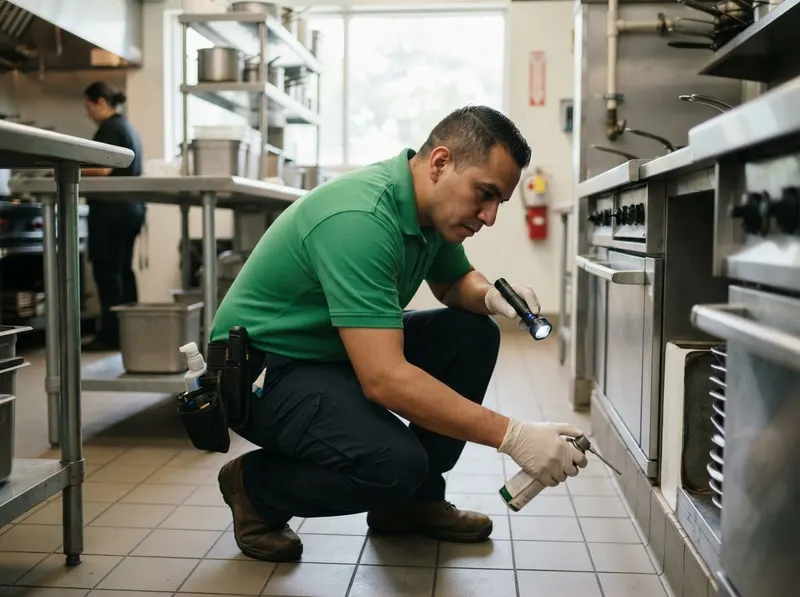
Miami commercial facilities operate under continuous pest pressure fueled by persistent 80% relative humidity, ambient temperatures averaging above 75 degrees Fahrenheit year-round, and coastal precipitation patterns that drive sub-tropical pests indoors. In high-density dining corridors such as Wynwood, Coral Way, and Brickell, common-wall retail spaces face frequent cross-contamination from adjacent utility chases, floor sinks, and commercial grease traps. Florida DBPR health inspectors issue critical structural violations for visible pest activity, unsealed electrical conduit penetrations, or inadequate chemical handling records. Relying on broad-spectrum baseboard sprays fails to address hidden breeding points inside stainless steel prep tables, hollow conduit runs, drop ceilings, and hollow block masonry common to older properties in Little Havana and Allapattah. Health-code compliance requires continuous non-food-contact baiting matrices, target-specific insect growth regulators (IGRs), tamper-resistant monitoring traps, and physical vector barriers that remain intact during daily washdowns.
Selecting dedicated commercial health-code pest management provides structural defense and documented accountability rather than reactive emergency spraying. Standard retail or residential approaches depend on broad pyrethroid sprays that quickly wash away on wet kitchen tile and can trigger product contamination notices under state inspection protocols. Commercial health-code programs employ integrated pest management (IPM) methodologies: technicians install tamper-proof rodent stations anchored along exterior block perimeters near loading docks, position non-chemical glue boards inside monitored mechanical rooms, apply food-safe biochemical foams into active commercial floor drains, and seal structural entry voids down to 0.25 inches. This technical approach protects kitchen operations along high-traffic routes like the Calle Ocho corridor and the Upper Eastside, keeping facility records clean for unscheduled county reviews.
Operational trade-offs center on production access versus treatment visibility. Implementing proactive health-code pest management requires designated access to structural areas during non-operational preparation windows, as thorough monitoring station checks along grease lines, dish stations, and compressor motor bays cannot occur during active meal rushes. For properties located near tidal surge zones or historic water tables around Edgewater and Coconut Grove, daily sub-tropical rain cycles cause exterior stormwater backups that wash bait residues from standard ground perimeter traps. Technicians counter this by installing rain-shielded elevated perimeter bait anchors and weather-resistant polymer formulations that withstand South Florida precipitation. Facilities operating with active plumbing defects or unsealed floor tile grout must schedule structural repairs concurrently, as chemical applications alone cannot compensate for active moisture leaks or chronic organic debris accumulation beneath kitchen equipment.
Every job gets a firm, written price after a free on-site visit.
Tell us about your commercial health-code pest management job in Miami and we'll send a clear, written quote, usually the same day.
 Silver Palm Pest Control